


Bushfire Fuel Reduction: Why Mulching is Essential
In regional Victoria and southern NSW, bushfire risk is not just a possibility — it’s an annual reality. According to the Victorian Country Fire Authority (CFA), “everyone in Victoria who lives near dense forest, bush, grassland or the coast needs to prepare their property for bushfire” (CFA).
At Acrewise Civil, we specialise in forestry mulching — the safest and most sustainable way to manage fuel loads and protect your property, your stock, and your community.
Why Fuel Reduction Matters
Bushfires spread when three elements combine: heat, oxygen, and fuel. While we can’t control the weather, we can control the fuel.
-
During the 2009 Black Saturday Bushfires, over 450,000 hectares were burnt and 173 lives lost. The Royal Commission identified how unmanaged vegetation and fuel loads contributed to fire severity.
-
The Department of Environment, Land, Water and Planning (DELWP) has shown that reducing fine fuels (like grass, shrubs, and leaf litter) by even 50% can significantly slow fire spread, lowering flame height and giving firefighters a greater chance to defend properties (FFMVic).
Overgrown scrub, blackberries, tea-tree, and fallen timber are all high-risk fuels. Left unmanaged, they can turn a controllable grass fire into an uncontrollable blaze.
Why Choose Mulching Over Burning or Spraying?
-
🔥 No burn-off risks
CFA guidelines stress that planned burns require permits, create smoke, and can escape control if conditions change (CFA Planned Burns). Mulching reduces fuel without introducing new fire risks. -
🌱 Environmentally responsible
Spraying only kills vegetation — it doesn’t remove it. Dead plants dry out and become even more flammable. Mulching processes vegetation into fine organic matter, feeding the soil while eliminating fuel. Local councils, such as Nillumbik Shire, even recommend mulching as a safer alternative to burn-offs due to smoke and pollution risks (Nillumbik Council). -
⏱ Immediate and lasting results
Mulching delivers results on the same day. Unlike spraying, which takes weeks to take effect, or burning, which is weather-dependent, mulching gives certainty and reliability.
How Acrewise Machines Make the Difference
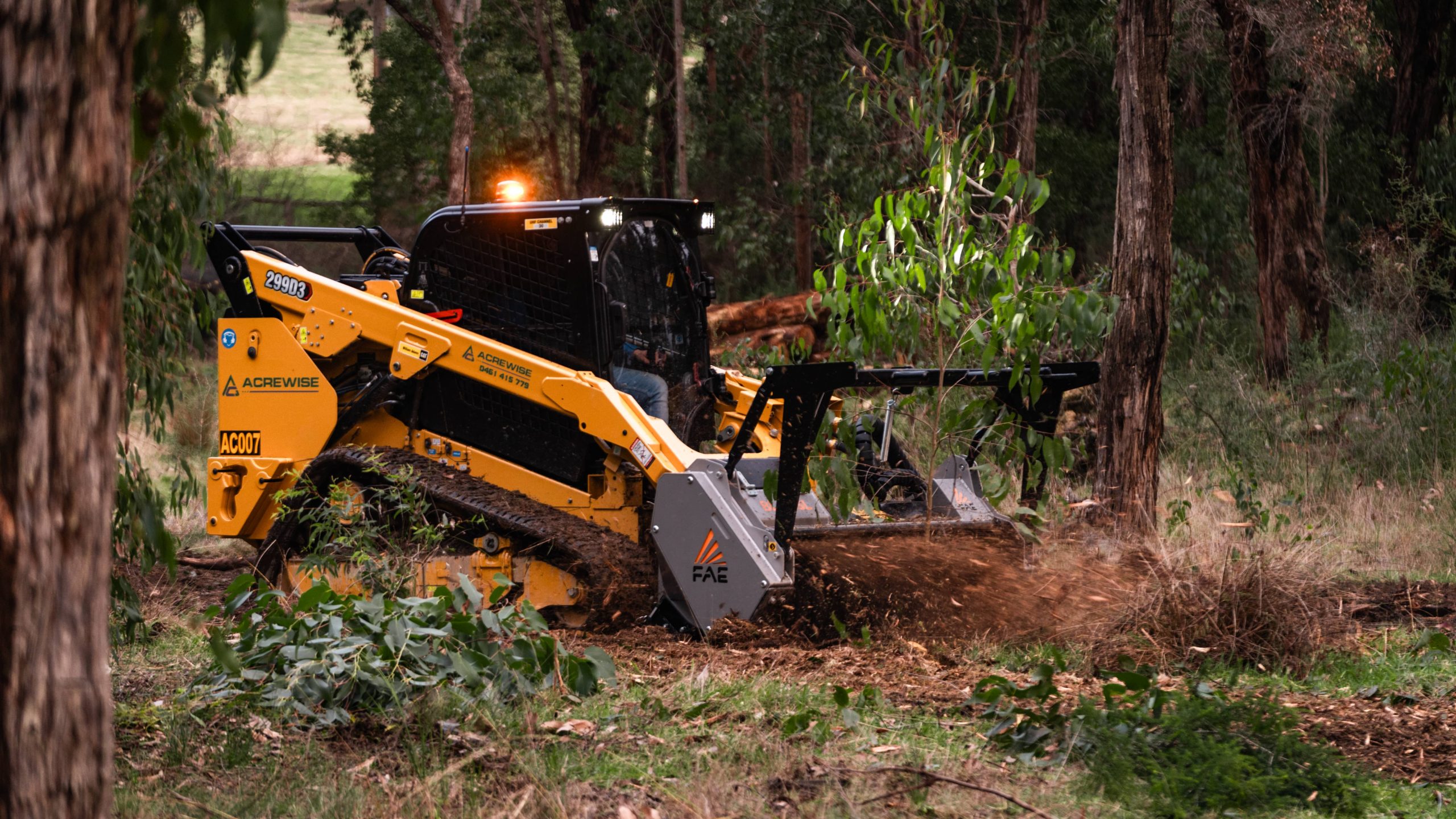
Our excavators and skid steers fitted with FAE mulchers are purpose-built for heavy vegetation and fuel management:
-
Dense thickets are broken down quickly into fine mulch.
-
Root-level mulching slows regrowth by up to 60% compared to surface slashing.
-
The mulch layer insulates soil, prevents erosion, and recycles nutrients back into the ground.
Victoria’s Joint Fuel Management Program (JFMP) uses the same approach — combining burning and mechanical methods like mulching — as part of its official 3-year bushfire safety strategy (Bushfire Planning JFMP).
A Smarter Investment in Fire Safety
Fuel reduction isn’t just about compliance — it’s an investment in protecting your home, your livelihood, and your community.
By choosing mulching, you’re choosing a method that:
-
Reduces fire intensity and ember attack potential.
-
Produces long-term results with less regrowth.
-
Improves your land while reducing risks.
As forestry expert Dr Glen Kile explains, fuel reduction “reduces fire severity, ember generation, and smoke emissions,” making it a vital step in protecting rural properties (Herald Sun).
Take Action Before Fire Season
The CFA recommends preparing your property well before summer — not waiting until fire warnings are issued. The best time to act is now.

Comments are closed